
Roundtable: Mental Health 2025

Everyone’s mental health today
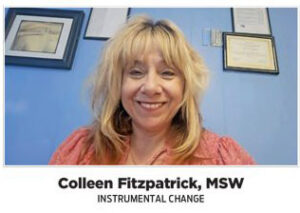 I think most people are on edge, and that’s due to many factors: political, economic, social. With the advent of social media and the way some people use it, they compare themselves to others and their feelings end up getting hurt.
Colleen Fitzpatrick, MSW, LCSW
Deciding if you need therapy
If the issues you’re struggling with keep you up at night, if they’re bothering your eating habits, if they’re bothering your ability to socialize and you’re just not enjoying your life overall, it’s time to consider therapy.
Colleen Fitzpatrick
The stigma of seeking help
The stigma is changing, and we should give credit where it’s due. A lot of celebrities are coming out, like Lady Gaga, and saying, “Yes, I struggled with PTSD” or “Yes, I struggled with anxiety or addiction issues.” Because then people say, “Wow, if they can get help, I can.”
Colleen Fitzpatrick

What happens at therapy
It’s different for everybody. I focus on the therapeutic rapport for quite a while. I’m going to get to know you on an intimate level. I don’t want to just hear about your anxiety and depression. I want to hear about who you are as a person, your life, your relationships and how all those things are affecting your ability to live your best life.
Colleen Fitzpatrick
Telemedicine
If you had asked me about telemedicine for therapy 20 years ago, I would have said, no way. But since the pandemic, we’ve had to adjust. And things changed. There’s a learning curve though. You can’t just jump in and do online therapy, it’s not the same dynamic as being in the office. Not at all.
Colleen Fitzpatrick
Childhood Trauma
If we are shown a lack of affection in childhood, then our love language, what makes us feel good, may become physical touch, which makes sense, because it’s something we didn’t get as a child.
Colleen Fitzpatrick
OCD (Obsessive Compulsive Disorder)
OCD is one of the most crippling things somebody can go through. Basically, the alarm system in your brain is broken. Someone may leave the house in the morning and think the coffee pot was left on. Did I turn it off? Let me go back and check. Did I turn it off? Let me go back and check. OCD is when those obsessions become compulsions, and it takes over your whole life and interferes with your ability to function.
Colleen Fitzpatrick
Treating OCD
One form of therapy we use for people with OCD is exposure therapy, where we slowly expose someone to what they’re obsessed with. Then they write down their feelings and over time, they start to realize it’s not a threat.
Colleen Fitzpatrick
Signs of Anxiety
You would be shocked at all the ways anxiety is manifested, both physically and emotionally. Physically, it is this horrible feeling in the pit of your stomach that something horrible is going to happen. Your chest may start pounding, you may sweat profusely. Some people tend to drop things a lot. Their motor skills are off. Anxiety can be absolutely crippling. You need to go to therapy for anything that starts to affect your daily living, your ability to function, your ability to eat, sleep, socialize. When those things are off, you need therapy.
Colleen Fitzpatrick
Symptoms of depression
Depression is so hard to describe. It’s like seeing life through black sunglasses. There’s so much negativity and hopelessness. The smallest thing can happen, and it becomes a big catastrophe, because when you’re depressed, you don’t have the coping skills to manage it.
Colleen Fitzpatrick
How social media affects mental health
Social media was developed inherently as not a bad thing. But it’s the way we utilize it. I love Instagram, but I’m not comparing myself to other people, I’m looking at recipes. I’m not looking at who went to the most expensive restaurant, I couldn’t care less. If it’s monitored the right way, then it can be used as a tool. A lot of boundaries need to be set, whether you’re an adult or child.
Colleen Fitzpatrick
What work has taught them about life
Early in my life, I decided I was going to conquer one of my biggest fears, which was death. I worked in hospice for several years, and the lessons I learned were amazing. I was meeting people who were dying and they regretted working too much, not keeping in touch with friends, not travelling enough. They taught me that if you want to take three vacations to Europe in a year, then you should do it.
Colleen Fitzpatrick

Colleen's diverse background can help you achieve long lasting results.
- Masters in Clinical Social Work
- Certificate in Business Communications
- Extensive Training and Certifications in Hypnosis, Studio Art and Neurologic Music Therapy
Post Graduate Training in:
-
- Group Dynamics
- Psychoanalysis
- Interpersonal Relationships
- Communication
- Delegation and Work/Life Balance